
3 Mistakes to Avoid When Working with Transgender and Non-binary Clients

Submitted by Kristie Overstreet on Mon, 10/21/2019 - 04:55pm

Have you ever worked with a client and felt unsure if you are providing the best support? Whether you are a new or seasoned therapist in the mental health field, we all can benefit from ensuring we are giving the best care. When you work with transgender and non-binary clients, it’s essential to provide the clinical care they deserve. Many transgender and non-binary people face hardships, which can include discrimination, fear of violence, suicide, as well as lack of family support. Clinicians need to be aware of how their assumptions and perspective affect their clinical presence. As

Read More

Clinical Supervision on the ASWB Licensing Exams

Submitted by Heidi Tobe on Wed, 10/09/2019 - 07:43pm

This may come as a surprise to some LMSW and LCSW test-takers, but you are likely to see some questions on the ASWB exam asking what action a supervisor should take with their supervisee. The ASWB puts clinical supervision questions on their exams for two reasons.: 1. To assess whether social workers understand the purpose of and activities done in supervision; and 2. Once you pass this exam, supervising other social workers may be in your future! The NASW and ASWB collaborated to create a document on the Best Practice Standards in Social Work Supervision. While this goes into far greater

Read More

Free MFT Practice Question: Bereavement

Submitted by Robin Gluck on Tue, 10/01/2019 - 06:29pm

If you are preparing for your California or National MFT Clinical exam, you will want to be familiar with the topic of bereavement. Uncomplicated bereavement, as it is termed in the DSM 5, should be considered when, “the focus of clinical attention is a normal reaction to the death of a loved one.” Bereavement is not considered a mental health disorder, but rather a condition that requires clinical attention or one that affects existing mental disorders. How might the topic of bereavement appear on your MFT Clinical Exam? You could be tested on: Diagnostic criteria for bereavement Different

Read More

DSM-5: No More Multiaxial System

Submitted by Heidi Tobe on Fri, 09/27/2019 - 05:21pm

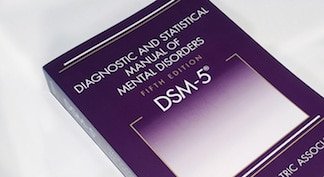
The DSM-5 was published in 2013. Many social workers went to school learning the DSM-IV-TR and because of this, we still receive coaching questions about the differences between the DSM-IV-TR and the DSM-5. We know regardless of which DSM you went to school with, picking up the DSM-5 can feel daunting. The thought of learning and applying all of the DSM-5 information to LCSW exam questions can be overwhelming. But fear not: TDC's got you covered! How am I supposed to memorize the DSM-5? The good news is, you aren’t! The ASWB does not expect you to have the DSM-5 memorized. One of my favorite

Read More

Free LCSW Practice Exam Question

Submitted by Robin Gluck on Fri, 09/27/2019 - 02:22pm

Alright Social Work Exam and MFT Exam-Takers, it’s Tuesday, time for another free LCSW practice exam question to help you study. For this week's Hot Topic we’re taking a brief look at Domestic Violence. Let’s take a closer look at a possible test item.

Read More

How to Not Personalize a Client’s Relapse?

Submitted by Kristie Overstreet on Mon, 09/23/2019 - 08:10pm

The field of addiction counseling is a tough one at times. Helping a client along their journey from their life being out of control to recovery can be one of the most rewarding parts of being a therapist. However, just as exhilarating as it is to see a client succeed, it can be daunting when they don’t. There is no such thing as a perfect client or therapist. Here is what you need to know, so you don’t personalize a client’s relapse. What is a relapse? Relapse is the return of an illness after a period of improvement. The time frame of improvement differs from person to person. There is a

Read More

What is an MFT? Definition of an MFT

Submitted by Robin Gluck on Wed, 09/18/2019 - 11:42pm

MFT (Marriage and Family Therapist ) - It is nearly impossible to move through adulthood without being asked (possibly too often) “What is it that you do?” And it’s often the case that a response of, “I’m an MFT,” is met with a look of confusion. The mental health field has more acronyms than one can count. MFT, LCSW, LPCC, HIPAA, BBS, CBT, DBT…and the list goes on. Even when the acronym is spelled out, “Marriage and Family Therapist,” an explanation is often still required. What is a Marriage and Family Therapist (MFT)? According to the Federal government, Marriage and Family Therapists are

Read More

ASWB Practice Question: Aging Adults

Submitted by Heidi Tobe on Mon, 09/09/2019 - 07:00pm

As you prepare for your ASWB exam, know that issues surrounding aging adults are likely to show up in one form or another on your test. The ASWB is assessing not only that you know how to appropriately respond to scenario questions with aging adults, but also that you know symptoms for common diagnoses such as Dementia, Parkinson’s Disease, and Alzheimer's. Additionally-and this is an important one-they want to make sure you aren’t answering based on any underlying assumptions or stereotypes you have about aging adults. Self-Determination Like our work with any client population, we want to

Read More

5 Things to Consider if You Want to Be a Sex Therapist

Submitted by Kristie Overstreet on Mon, 08/19/2019 - 05:08pm

As a sex therapist, your decision to specialize in a niche clinical area is an important one. There are many areas of focus that you can choose to work in. My advice is that you work in a few areas to decide what you enjoy and more importantly, what you don’t enjoy. As you develop your general clinical skills, you will begin to find the type of client issues you enjoy working with on a daily basis. My clinical journey led me to the field of clinical sexology. Many factors went into my decision-making process to specialize in the area. If you are considering specializing as a sex therapist

Read More

Free Law and Ethics Practice Question: Advertising

Submitted by Robin Gluck on Mon, 08/12/2019 - 08:03pm

This month’s California law and ethics practice question tests your knowledge of legal and ethical issues regarding advertising. If you are an associate MFT, Social Worker, or PCC in California, you can expect to see questions related to this topic appear on your exam Law and Ethics exams. It’s important to know the legal requirements, delineated in the CA Business and Professions Code and the ethical obligations included in your professions code of ethics. The BBS falls under the Department of Consumer Affairs and wants to ensure consumers have the correct information to make informed

Read More
Subscribe to